
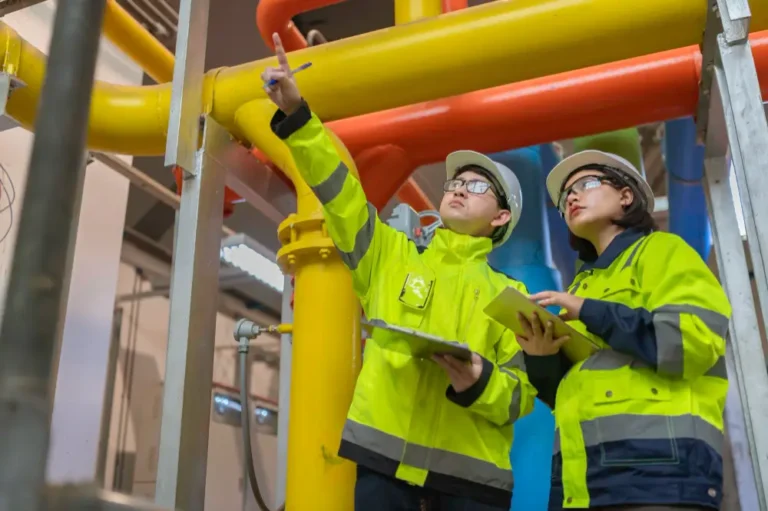
TL; DR: Toxic gases in industrial settings can harm people, damage equipment, and cause big financial losses if not dealt with quickly. Modern detection systems work faster, give more accurate readings, connect directly to safety measures, and stop small leaks before they grow. The right tools mean you can act early and keep both your team and your operations safe.
Key Takeaways:
- Older detection systems often miss hazards or respond too slowly.
- Advanced sensors can track multiple gases at once with high accuracy.
- IoT integration allows predictive maintenance and quicker responses.
- Regular calibration is critical to ensure sensors work as intended.
Understanding the Stakes in Semiconductor Safety
Toxic gases are an invisible but ever-present danger in semiconductor manufacturing. Gases like silane, arsine, phosphine, and hydrogen chloride are vital for making chips, but they can be just as dangerous as they are useful.
Inside a tightly controlled plant, even the smallest leak can quickly turn into a serious safety emergency or bring production to a halt.
The industry has responded by moving past basic alarm systems, turning instead to smarter detection technology that offers precise monitoring, faster reactions, and gives teams the information they need to act without delay.

Why the Old Ways Aren’t Enough Anymore
Traditional gas detection systems often relied on fixed-point detectors with basic threshold alerts. While these setups did offer some level of protection, they had clear shortcomings, such as:
- Frequent false alarms that interrupted work, slowed production, and reduced confidence in the safety system’s accuracy.
- Slow reaction times when plant conditions shifted quickly, leaving teams with less time to act.
- Limited coverage, which meant some parts of the facility weren’t monitored as effectively as they should be.
- Poor adaptability to detect new or less common gases introduced with changes in manufacturing processes.
- Minimal data insights, making it harder for safety teams to analyse trends or refine safety procedures.
- High maintenance demands, increasing the risk of downtime if servicing was delayed or skipped.
As semiconductor plants operate at higher speeds, on a larger scale, and with more complex processes than ever before, the weaknesses of outdated detection methods become clear.
Relying on them means leaving dangerous blind spots in safety.
What’s needed now are smarter, more adaptable systems that can spot hazards the moment they appear, give safety teams timely and accurate information, and help them take action early enough to stop small issues from turning into serious problems.
The Shift to Advanced Detection Technologies
Real-Time Multi-Gas Monitoring
Modern sensor technology now makes it possible to detect several different toxic gases at the same time, without sacrificing accuracy.
This means hazardous compounds are far less likely to go unnoticed.
The information these sensors gather is fed straight into plant safety systems, giving teams the ability to quickly pinpoint the source of a problem and isolate the area before it can spread or cause serious harm.
Photoionisation Detection (PID) and Infrared (IR) Sensors
PIDs are excellent for detecting volatile organic compounds at extremely low concentrations, while IR sensors are highly selective for specific toxic gases.
The combination provides both sensitivity and accuracy, reducing false alarms while ensuring critical threats are identified immediately.
Open-Path Detection Systems
Unlike fixed-point detectors, open-path systems scan large areas continuously, making them ideal for expansive semiconductor cleanrooms.
This approach drastically improves early detection capability, especially in high-risk zones where airflow may disperse gases quickly.
Integration with IoT and Data Analytics
Modern detection systems are now networked into IoT platforms. Data from detectors is analysed in real time, enabling predictive maintenance and risk modelling.
This helps plants not only detect incidents faster but also anticipate and prevent them.
Of course, none of this works as intended if calibration is skipped or delayed, which is why it’s worth learning how neglecting calibration could put your business at serious risk.
Beyond Detection: Maintenance and Calibration Advances
Even the most advanced detection system can only do its job well if it’s cared for properly.
Newer automated calibration tools mean sensors can check and fine-tune themselves on a set schedule, cutting down on the need for constant manual adjustments.
Maintenance teams can now:
- Use cloud-based tracking to make sure inspections never slip through the cracks.
- Rely on remote diagnostics to spot and fix issues before they grow into bigger problems.
For facilities looking to improve overall upkeep and avoid costly downtime, these practices go hand-in-hand with broader industrial equipment maintenance strategies that boost plant efficiency.
These steps help keep sensors running for longer periods and ensure they stay accurate when it matters most.
Emergency Response Integration
Advanced toxic gas detection systems can now be directly linked to emergency response mechanisms within the facility. These capabilities can include:
- Automatic shutdown of equipment to prevent further gas release or damage.
- Activation of ventilation systems to clear hazardous gases from the air quickly.
- Triggering of evacuation protocols to move personnel to safety without delay.
By connecting detection data directly to these response systems, plants can cut reaction times from minutes to just seconds, which can make all the difference in reducing harm and protecting both people and equipment.
Regulatory Compliance and Documentation
Staying compliant with safety regulations in semiconductor manufacturing is more than just ticking a legal box.
It is an essential part of keeping operations safe and reliable. Modern detection systems make this easier by offering tools that:
- Automatically record and organise incident data for quick review by regulators.
- Cut down on paperwork, allowing safety teams to focus on improving processes instead of chasing documents.
- Provide a real-time view of plant conditions, so managers can spot patterns, respond to risks sooner, and strengthen safety performance over time.
When Precision Saves Lives and Millions
Even a short delay in detecting toxic gases can have serious consequences.
Workers might be exposed to dangerous chemicals, production lines could be contaminated, and costly equipment could sustain damage.
The financial impact from a single incident can be overwhelming, with expenses mounting from medical treatment, lost production time, and significant regulatory fines.
Many facilities are now choosing systems that not only catch leaks quickly but also predict when and where problems might arise.
This gives their teams valuable time to prepare a response, fix the issue at its source, and prevent what could have been a small leak from turning into a major safety or production crisis.

Why Choose Minerva Intra for Semiconductor Toxic Gas Detection
Minerva Intra understands that semiconductor manufacturing demands uncompromising safety standards.
With years of experience in delivering specialty gas detection solutions tailored to the semiconductor industry, the company combines top-tier sensor technology with deep application expertise.
Their semiconductor manufacturing specialty gas detectors are designed for:
- High Sensitivity and Accuracy: Detecting toxic gases at parts-per-billion levels.
- Custom Integration: Seamless fit into existing plant safety systems.
- Reliability: Built for continuous operation in demanding cleanroom environments.
You can see how our technology works in real-world applications by exploring our specialty gas detectors for semiconductor manufacturing
Take the Next Step Towards Safer Semiconductor Manufacturing
Don’t wait for an incident to reveal the gaps in your toxic gas detection strategy.
Protect your people, your products, and your bottom line by upgrading to advanced detection systems that meet today’s semiconductor challenges.
Contact Minerva Intra today to discuss how their specialty gas detection solutions can be customized for your facility.


