TL;DR: Gas detection placement works best when it is planned around real site risks, not convenience. Reviewing gas behavior, airflow, release points, access, and alarm response before installation helps teams build a safer and more reliable detection setup.
Key Takeaways
- Detector location should follow gas movement, leak risks, and site layout.
- Airflow, obstructions, and hidden spaces can affect how fast gas reaches a detector.
- Safe maintenance access helps keep detectors reliable after installation.
- Alarm visibility, labeling, and system integration help teams respond faster.
A gas detector can only warn people when it is placed where gas is likely to reach it. Yet on many industrial sites, placement is treated as a quick installation task instead of a planned safety review.
For areas with gas hazards or confined spaces, gas detection placement should never be rushed. Teams should review gas behavior, airflow, leak sources, access, alarms, and maintenance needs before installation.
Right Detector, Right Spot
Industrial gas detectors work best when placed where gas is likely to travel during a leak or ventilation failure. Reviewing placement before installation helps avoid costly changes later.
Good placement helps alarms give clearer, faster warnings. Poor placement can lead to nuisance alarms, delayed response, or confusion about where the hazard started.
Start With the Gas
One common mistake is choosing a neat mounting point first, then forcing the detector into that location. A safer approach starts with the gas hazard.
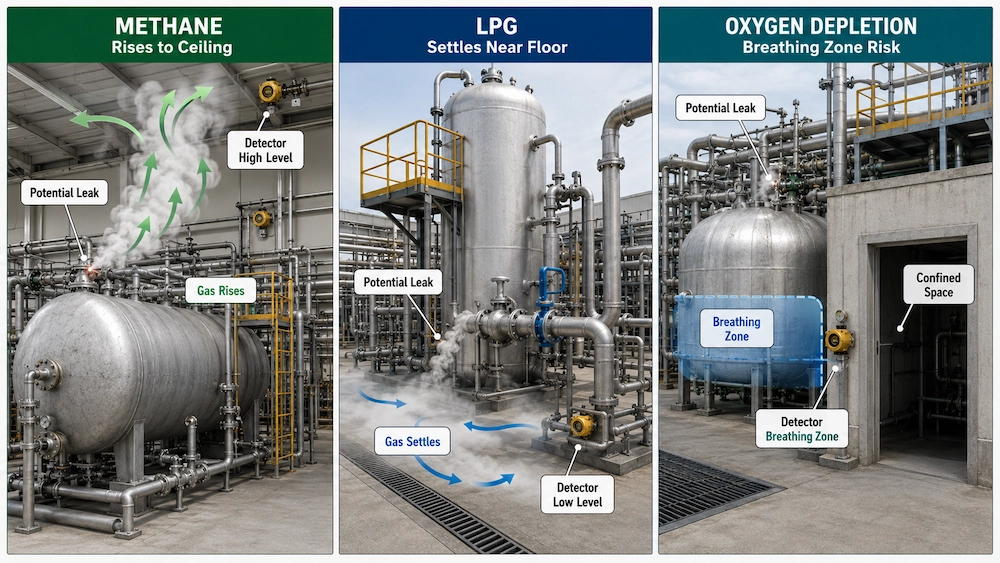
Know the Gas Behavior
Different gases move in different ways, so placement should match how each gas behaves. Some rise, some settle in low areas, and others disperse based on temperature, pressure, ventilation, and nearby equipment.
That is why one mounting rule cannot fit every site. A detector for methane will not always be placed like a detector for LPG, hydrogen, carbon monoxide, chlorine, oxygen depletion, or volatile organic compounds.
Ask Before Placing
Before choosing a detector location, teams should ask the right site-specific questions:
- What gas is being handled?
- Where is it stored, transferred, mixed, burned, or vented?
- Is it toxic, flammable, oxygen-displacing, or corrosive?
- Could it be released under pressure?
- Could it pool in a low point or rise into a roof space?
These questions turn guesswork into safer, risk-based placement.
Walk the Leak Path
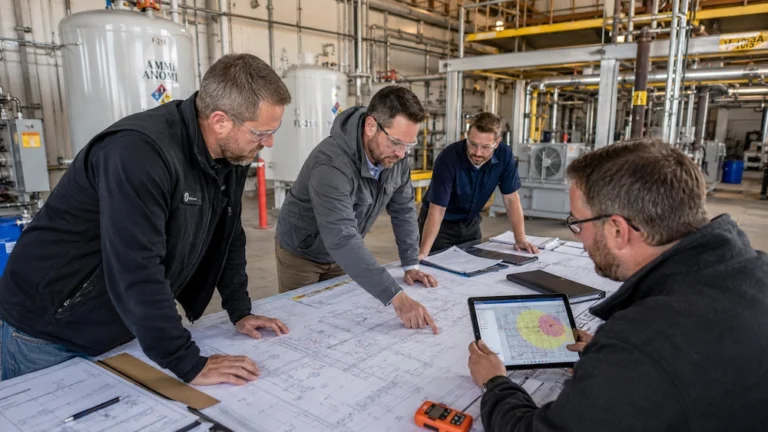
Drawings are useful, but a site walk often shows changes they miss, from modified equipment to permanent temporary structures. It can also reveal new piping, cabinets, skids, storage racks, partitions, or airflow changes that affect how gas moves.
Find Release Points
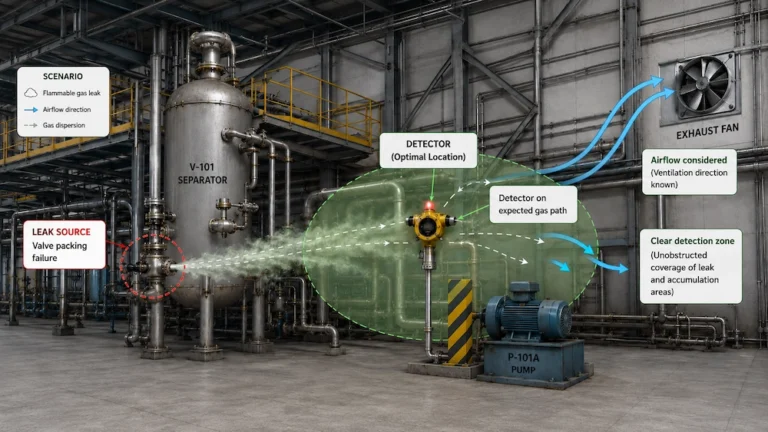
Start by identifying where gas is most likely to escape, then match each detector location to the site’s actual hazards, airflow, and access conditions. Common release points include:
- Valves and flanges
- Pumps, compressors, and regulators
- Gas cabinets and cylinders
- Storage tanks and loading points
- Sample points and enclosed utility areas
Check Hidden Areas
Leaks can hide behind equipment, under platforms, in trenches, near drains, above ceilings, or in poorly ventilated corners. Outdoor areas also need care because shifting wind can carry gas away from the nearest wall-mounted detector.
A useful site walk should include operations and maintenance staff because they know where access is difficult and where process changes may have created new risks. For inspections, confined spaces, or temporary checks, portable gas detectors can also support safer on-site decisions.
Airflow Can Mislead
Ventilation can guide gas toward a detector, but it can also push it away from the detection point. That is why airflow from fans, doors, louvers, air conditioning, wind, and equipment heat should be reviewed before installation.
Before installation, teams should review failure scenarios, such as stopped fans, closed doors, or maintenance shutdowns. A detector layout should make sense beyond ideal operating conditions.
Mounting height is a safety decision, not a habit
Mounting height should be chosen with care. It is not enough to install every detector at eye level because it looks tidy or makes wiring easier.
Match Height to Gas Movement
Mounting height should follow how the hazard moves, not just where the detector looks neat. Gases that rise may need higher placement, while gases that settle often need lower detector positions.
Some applications need a different approach. Oxygen monitoring may focus on worker breathing zones, while open path detection needs a clear, aligned beam route across the area being monitored.
Consider Site Conditions
Gas movement is shaped by more than density. Release pressure, temperature, ventilation, obstacles, and room layout can all change where gas travels.
Mounting height should also protect the detector from daily site conditions. Impact, washdown spray, dust, and routine work can affect both performance and service life.
Plan for Access
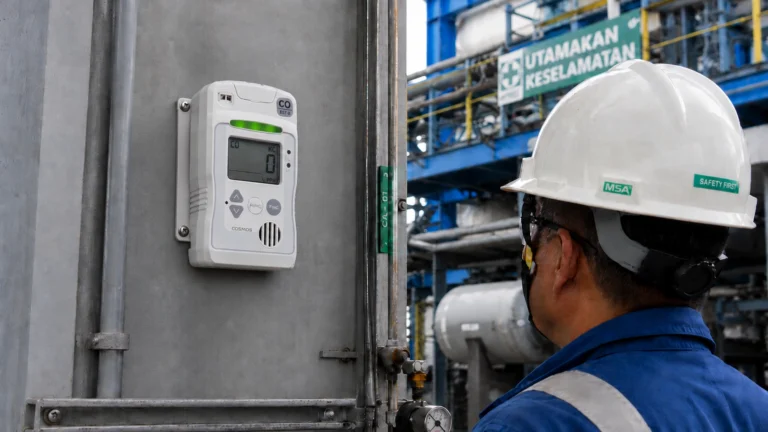
A hard-to-reach detector can become a weak point, even when it is placed in the right hazard area. Safe access makes inspection, cleaning, bump testing, calibration, sensor replacement, and routine checks easier to complete on time.
Detectors should not be placed only where they are easy to reach, since detection performance still comes first. The best location supports accurate hazard detection while giving maintenance teams safe access to keep the system reliable.
Match the Site Environment
Harsh site conditions can affect detector performance and service life, including heat, humidity, vibration, dust, corrosive vapors, water spray, sunlight, electrical noise, and impact.
Before installation, review the surrounding conditions:
- Is the area indoors or outdoors?
- Will the detector face rain, washdown, or direct sun?
- Is there dust, oil mist, chemical vapor, or high humidity?
- Is the area classified as hazardous?
- Will the sensor need a sampling system, protective cover, splash guard, filter, or special enclosure?
Detector technology should fit the gas, site conditions, response needs, and maintenance plan.
Support Fast Response
Gas detection placement should support fast response, not just leak detection. Clear zones, labels, alarms, panels, beacons, sounders, and set points help teams understand the risk and act quickly.
If detectors connect to panels, ventilation, shutdown systems, monitoring platforms, or security rooms, placement should support reliable signals, clear communication, and easier troubleshooting.
Pre-Installation Checklist
1. Gas Hazard Review
- Gas type and hazard level
- Likely leak sources
- Gas movement and pooling risk
- Airflow and ventilation failure
2. Detector Location and Access
- Mounting height and distance
- Nearby obstructions
- Site exposure and conditions
- Maintenance access
3. Alarm, Integration, and Future Changes
- Alarm visibility and sound coverage
- Labels and response procedures
- System integration
- Future site changes
This checklist should not replace a proper engineering review, but it gives teams a clear starting point.
How Minerva Intra Helps Plan Safer Placement
Minerva Intra helps Malaysian sites plan, install, and maintain reliable gas detection solutions. Its solutions serve oil and gas, utilities, marine, semiconductor, manufacturing, laboratories, automotive, and commercial facilities.
Minerva Intra reviews each site before recommending a gas detection system. This helps teams build a gas detection plan that fits the real site, supports fast response, and remains serviceable after handover.
Review Your Gas Detection Placement
If your site is planning a new gas detection system, upgrading an older setup, or unsure whether existing detectors are placed correctly, Minerva Intra can help you review the application before installation decisions become costly to change.