TL;DR: A fixed gas detection system works best when it is planned around real site risks, not guesswork or convenience. The right setup should detect gas early, guide clear action, and stay reliable through maintenance and future site changes.
Key Takeaways
- Start with leak sources, gas behavior, and airflow before choosing detector locations.
- Match detector coverage, sensor type, and alarm response to the actual risk level.
- Plan testing, calibration, access, and ownership before the system is installed.
- Review the system whenever the facility layout, process, or ventilation changes.
A fixed gas detection system can look complete on paper but still fail when it matters most. The issue often starts long before installation, when planning is based on convenience, budget, or assumptions instead of the real gas hazards inside the facility.
For industrial sites, a gas leak can disrupt safety, equipment, production, and compliance within minutes. A good plan shows what can leak, where it may travel, who is at risk, and how the facility should respond.
Start at the Leak Source
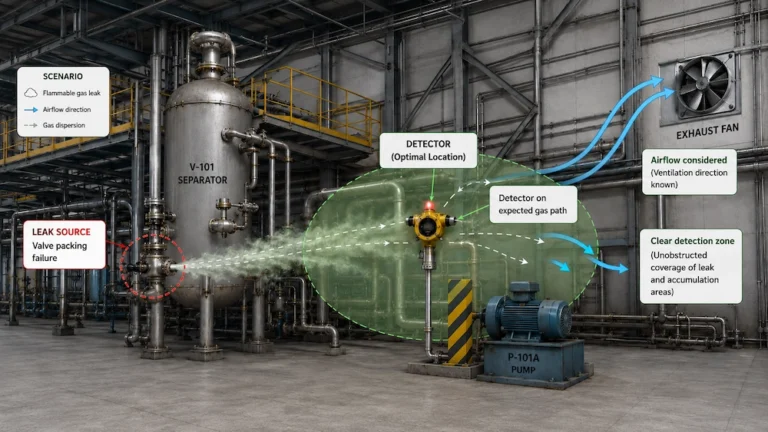
Good planning starts by finding where gas can leak. Before choosing detectors or alarm panels, map high-risk areas such as tanks, cylinder rooms, compressors, valves, loading bays, laboratories, battery rooms, process skids, wastewater areas, and confined spaces.
This step may sound basic, but it is where many mistakes begin. A detector placed for easy cabling or inspection may miss gas that escapes elsewhere, rises to the ceiling, or settles near the floor.
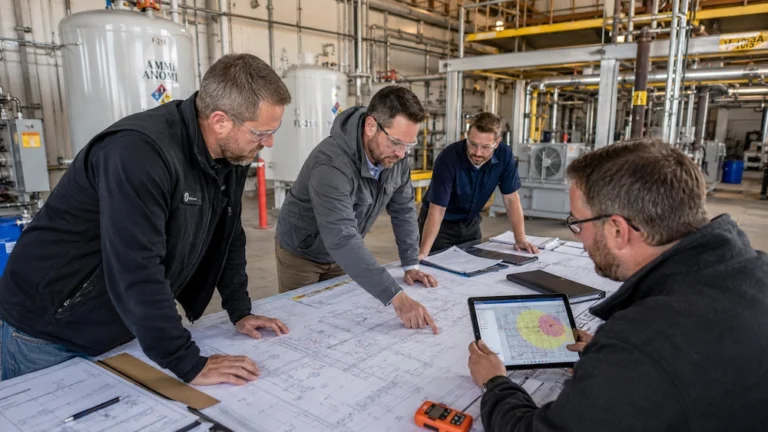
Walk the Site
Site drawings are useful, but they do not always show real operating conditions. During a walkdown, the planning team can check:
- Airflow and ventilation paths
- Equipment heat and nearby obstructions
- Access limits, worker routes, and maintenance activity
- Conditions that may affect how gas moves and how quickly a detector responds
The best walkdowns involve operations, maintenance, safety, and instrumentation teams, so the final system reflects real site risks and is easier to maintain.
Know the Gas First
A fixed gas detection system must be designed around the gas hazard, not the other way around. Different gases behave differently, and that behavior affects sensor choice, detector height, alarm settings, and maintenance requirements.
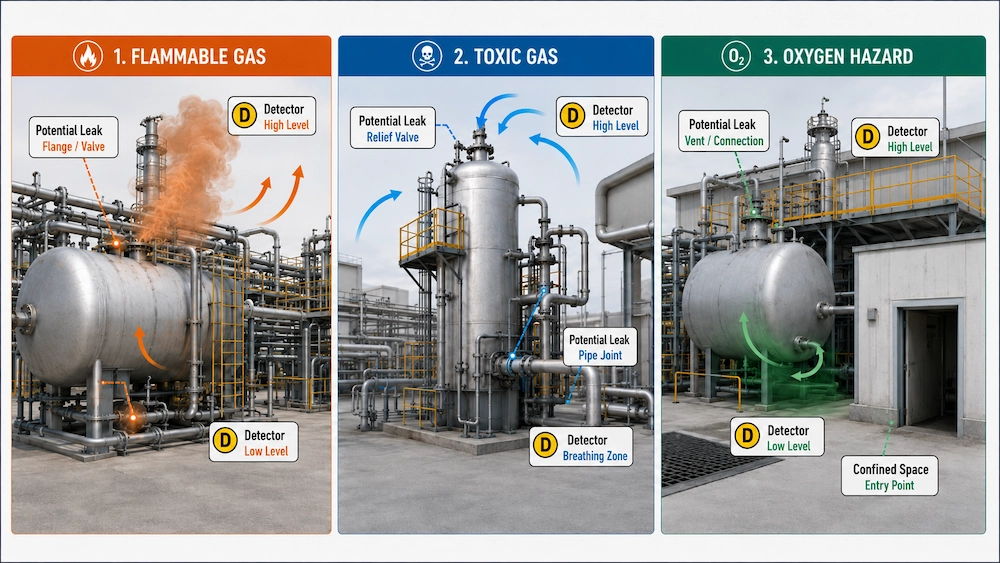
Flammable, toxic, and oxygen-related gases each need different alarm limits, sensor choices, and placement.
Gas Affects Placement
Detector height depends on gas behavior, airflow, and site conditions because some gases rise, some settle low, and others move with ventilation or process airflow.
Site conditions can also affect detector performance. Humidity, dust, washdown, vibration, heat, or corrosive air may require a different setup than a clean indoor room.
Plan Detector Count
The number of gas detectors needed depends on the facility’s risk, layout, airflow, and detection goals. More detectors do not guarantee better protection, and fewer only work when the hazard is well understood and coverage is properly justified.
A useful approach is to divide the facility into gas detection zones and review each zone based on:
- Possible leak points
- Worker exposure
- Ventilation and airflow
- Ignition sources
- Consequences of delayed detection
- Need for closer coverage or clearer alarm response
Match Coverage to Risk
A small leak in open air behaves differently from one inside a poorly ventilated enclosure. Detector coverage should match the risk, from simple awareness in low-consequence areas to ventilation, shutdown, or evacuation triggers in higher-risk zones.
This is where careful planning matters. The system should be practical, justified, and matched to the actual hazard, not oversized for comfort or reduced only to save cost.
Place Detectors Wisely
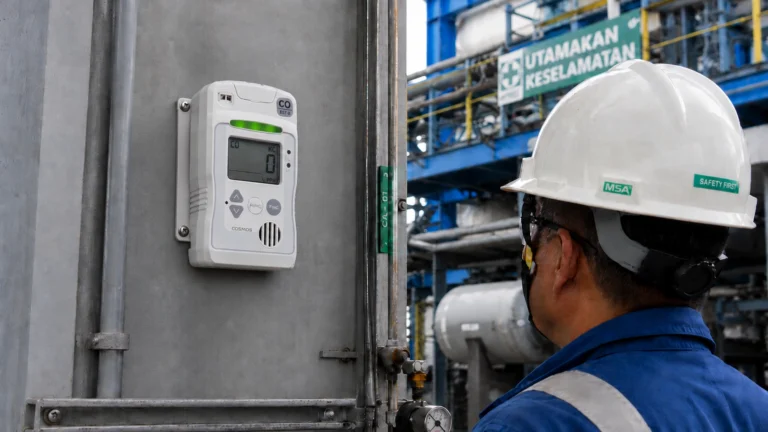
Detector placement is one of the most important parts of planning. A good location gives the sensor a strong chance of detecting gas early, while still allowing safe access for inspection, bump testing, calibration, and replacement.
Placement should account for leak sources, gas behavior, airflow, ventilation, barriers, equipment layout, and worker movement. Detectors should stay visible, exposed to likely gas paths, and protected from daily damage.
Keep Access Safe
A detector that is hard to reach is easier to skip or delay during routine checks. Plan access platforms, calibration ports, remote sensor options, or other practical setups where needed.
Plan for future site changes, since equipment, walls, ventilation, and processes can shift over time. Review the fixed gas detection system after these changes, so today’s safe placement does not become tomorrow’s blind spot.
Choose the Right Sensors
Different sensors suit different gases, site conditions, and maintenance needs. Choose the technology based on the gas, expected concentration range, environment, and how the facility will service it.
Some sensors are sensitive to poisoning, oxygen levels, humidity, or cross-sensitivity. Choosing a familiar sensor without checking the application can cause false alarms, missed alarms, or higher maintenance costs.
Consider Failure Risk
Ask what could happen if the detector fails to respond correctly. If the risk includes injury, ignition, shutdown, or compliance issues, the sensor’s choice needs careful review.
Plan for long-term support, not just installation day. Sensors of age, calibration needs to change, and replacement parts should remain available for years.
Plan Alarm Response Early
Detection is only the first step. A fixed gas detection system should tell the facility what to do next. If an alarm sounds and nobody knows who should respond, where to go, or what equipment should shut down, the system is incomplete.
Alarm levels should match the risk and show operators what action to take. A low alarm may prompt investigation, while a high alarm may trigger ventilation, shutdown, evacuation, or emergency response.
Connect Key Systems
Gas detection should connect with the systems that support the site’s response plan, such as alarms, ventilation, controls, shutdown systems, or remote monitoring. Keep alerts clear and properly prioritized, so operators know how serious the event is and what to do next.
Plan System Care
A reliable system needs clear ownership, testing, calibration, recordkeeping, and failure response from the start.
This is especially important in facilities where responsibilities are split across departments:
- Safety may own the hazard assessment
- Engineering may handle installation
- Maintenance may manage calibration
- Operations may respond to alarms
- Unclear roles can create safety and response gaps
Keep Records Simple
Keep records of detector locations, gas types, alarm setpoints, calibration, wiring, logic, certificates, and maintenance schedules. Clear documentation makes audits, troubleshooting, training, and future upgrades easier.
A good, fixed gas detection system is not finished after commissioning. It should be reviewed regularly, especially after processing changes, incidents, false alarms, near misses, or layout modifications.
Avoid Planning Mistakes
Some planning mistakes look harmless at first, such as placing detectors where installation is easiest or using the same detector type across areas with different gas hazards. These choices can create blind spots, false confidence, and higher maintenance problems later.
Common issues include poor ventilation planning, blocked maintenance access, unclear alarm response, and weak worker training. Review the system after site changes, process updates, incidents, false alarms, or near misses.
How Minerva Intra Helps
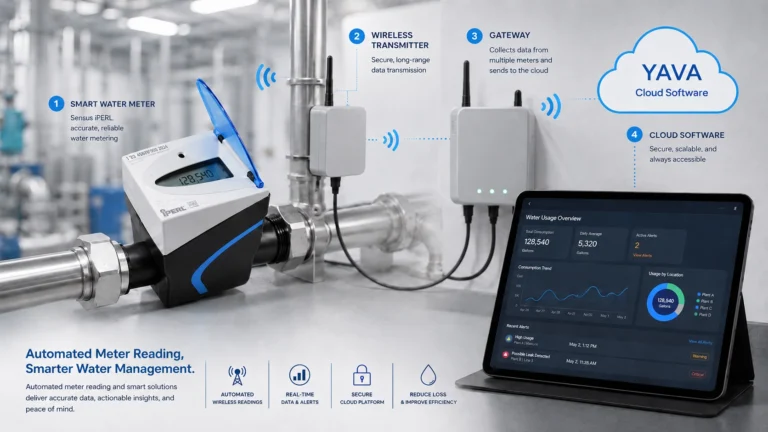
Minerva Intra supports industrial, commercial, and technical facilities with gas detection, environmental monitoring, flow metering, and engineered monitoring solutions. This helps ensure each fixed gas detection system fits the site’s hazards, layout, conditions, and response needs.
Minerva Intra helps clients plan beyond the product by looking at gas hazards, detector selection, system design, integration, calibration access, and long-term service needs. This gives facilities a fixed gas detection system that is easier to justify, operate, maintain, and improve over time.
Plan Safer Gas Detection
Planning a project, upgrade, or safety review is the right time to check your gas detection system. Minerva Intra can help identify what to monitor, where detection is needed, and how alarms should guide action on site.